
Frederick Charles Garner
26280 Private
2nd Bn., Duke of Wellington's (West Riding Regiment)
Killed in Action, Thursday, 24th October 1918
Remembered with Honour, Verchain British Cemetery, Verchain-Maugre, Nord, France, Grave B. 9.
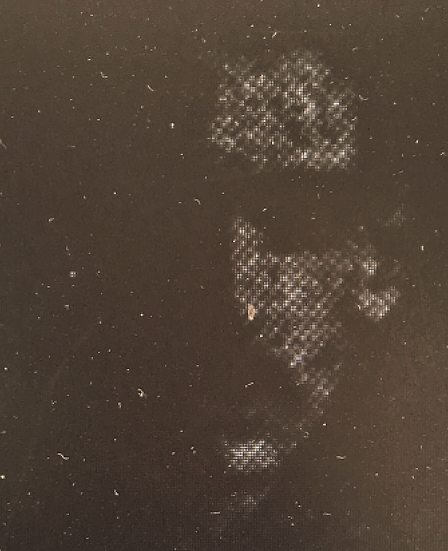
Pte. Frederick Garner
Frederick Charles Garner was born in Hemel Hempstead, Hertfordshire on Wednesday, 5th October 1887 and baptised a month later on Sunday, 13th November at St John the Evangelist Church in Boxmoor. He was born to Frederick Garner and Sarah Ann Howard who had six children together who were, William, Frederick, Alice Louisa, Bertie, Lizzie and one other unnamed child who died at birth. His sister Alice Louisa died in 1892 aged only three. The family lived on Anchor Lane in Boxmoor when Frederick was born, and he grew up on the street. In 1891, he was recorded staying with his brother and Grandmother just two doors away from their parents and by 1901 the family were all together again having moved to Bury Hill Road in Hemel Hempstead.
When he left school in 1900, Frederick went to work as an ‘Errand Boy’ for a local grocer, but not long afterwards he had found work as a ‘Labourer’ working for Arthur Nugent owner of the Bell Hotel at 51 High Street in Hemel Hempstead. The Bell Hotel is known today as ‘The Old Bell’ was one of a number of coaching inns on the High Street and it dates back to the early 18th century although there has been an inn on the site since approximately 1603. His employer and place of work were recorded on Frederick’s attestation papers when he enlisted in the Militia in January 1905 for a period of four years. This was a common event at the time as many young working-class men joined the Militia as a way of enhancing their incomes.
Frederick joined the 4th Bedfordshire Regiment when he was a few months past his eighteenth birthday and his papers described him thus: “Height 5 feet 10½ inches; Weight 126 lbs; Complexion Fresh; Eyes Blue; Hair Brown.”. He was categorised ‘Fit’ for military service and over the next year received sixty-three days training as well as attending an annual summer camp in 1905. He was discharged from the 4th Bedfordshire in April 1906 after paying £1 for his release, probably because he had obtained a better paying job. This may have been when started work at the Hemel Hempstead Institution, which was the old Union Workhouse which became St Paul’s Hospital and the forerunner to Hemel Hempstead Hospital, where he worked as a ‘Stoker’ in the boiler house. By this time, he had met Emily Coughtrey, a Boxmoor girl and they had become sweethearts. The pair were married on Saturday, 18th May 1907 in Hemel Hempstead and set up home in Union Square opposite the Workhouse. Two years later they had their first child, Frederick Charles who was followed by Bertie William in 1913.
On the outbreak of war, Frederick was immediately called up as an ex-soldier and he rejoined the Bedfordshire Regiment in August 1914. He was then sent to Dovercourt in Harwich to re-train, but this was cut short after only two months when a medical condition was diagnosed which meant that Frederick was immediately discharged. He had “Chronic catarrh of the middle ear with acute exacerbation” a condition which would have made him prone to hearing loss and as a result he was deemed “Unlikely to make an efficient soldier”. He was discharged on the 31st October 1914 and returned home to Hemel Hempstead.
However, in 1917 when the British Army were desperate for more men, Frederick was recalled to the services. He had been categorised ‘B2’ in 1914 which meant he was now suitable to join the Labour Corps. A medical note on his records recorded that Frederick suffer from “Slight irregularity of heart’s action and emphysema” but these were not considered serious enough to reject him. A ‘B2’ soldier, as a general rule, had to be able to walk two and a half miles to work and back and to be able to see and hear sufficiently for ordinary purposes. Additionally, they had to be able to handle a pick or shovel and carry out labouring work in ordinary civilian life. Frederick fulfilled these criteria and so in March 1917 he attested again in Watford and was immediately posted to the 142nd Company Labour Corps attached to the Northants Regiment. Less than two weeks later, he was sent overseas to a Base Depot in Etaples, France and then deployed in the field.
In October as the need for fighting men became critical, Frederick was transferred to a front-line unit and joined the 2/6th Battalion Duke of Wellington’s ( West Riding Regiment). This unit was disbanded shortly after he arrived and in January 1918 he was again transferred, this time to the 2/7th Duke of Wellington’s. Frederick was granted fourteen days home leave on the 20th March 1918, when he returned to Hemel Hempstead to see his family, which now included young Sonny George who had been born in November 1917 and who Frederick was to see for the first time. He returned to France in April and three months later was transferred for the final time when he joined the 2nd Battalion Duke of Wellington’s (West Riding Regiment). At the end of August Frederick fought in the Second Battle of Arras where the Battalion suffered over 300 casualties in four days of fighting. Frederick thankfully survived his first serious action in the field.
September and early October where, by comparison, relatively quiet until on the 19th October the Battalion went into action again. The 2nd Duke of Wellington’s was at Saulzoir to the east of Cambrai and over the following six days Frederick fought in a series of actions which resulted in the successful advance of the Allies towards the Hindenburg Line. However, the engagements were not without loss and the Battalion suffered 279 casualties with 190 of these occurring on the 24th October. Sadly, Frederick was amongst the men who fell, and he was initially recorded “Wounded in Action” but this was amended to “Killed in Action” a few days later.
He was killed on Thursday, 24th October 1918.
A month later a report of his death appeared in the Hemel Gazette.
Frederick was commemorated on the War Memorial plaque in St Paul’s Church on Queen Street after the war. Sadly, this plaque was lost when the church was demolished in the 1980’s, but it has been replaced by a Memorial Scroll which is on display in the new church in Highfield in Hemel Hempstead.
Frederick is Remembered with Honour in the Verchain British Cemetery, Verchain-Maugre, Nord, France, where he is interred in Grave B. 9.
He was 31 years old when he died.
Frederick was entitled to the British War Medal and the Allied Victory Medal.


