
Sydney Herbert Goodman
911339 Gunner
23rd Bty. 40th Bde., Royal Field Artillery
Died of Wounds, Saturday, 26th October 1918
Remembered with Honour, Awoingt British Cemetery, Nord, France, Grave II. B. 27.
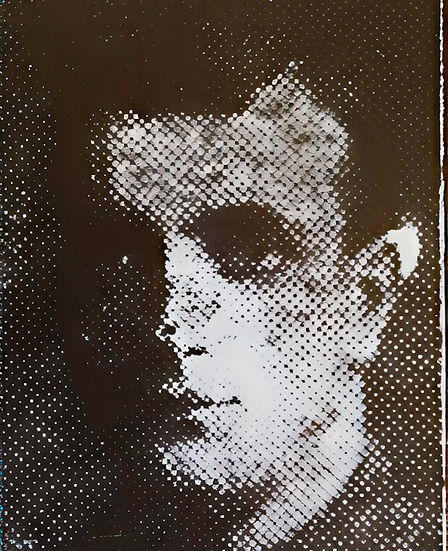
Gnr. Sydney Goodman c1916
Sydney Herbert Goodman was born in Ware, Hertfordshire in September 1890, the second son and sixth child of seven born to Alfred Goodman and Sarah Ann Knight. Their children where; Sarah Anne, Grace Eliza, Louise Florence, William Alfred, Effie Georgina, Dorothy, Sydney Herbert and the youngest May. Grace Eliza died in 1906 aged 24, and May in 1913 aged twenty. Herbert's father Alfred had been a ‘Solicitor’s Clerk’ but brought the family to the Hemel Hempstead area sometime after 1894 when he obtained a job with John Dickinson & Co. Limited. He set up home in nearby Apsley End where Sydney went to Apsley Boys school starting not long after arriving and left in September 1903 when he was thirteen years old. He immediately went to work in Dickinsons in the Book Department in Apsley Mills. He stayed at Apsley Mills until he left to volunteer and during that time, he was a member of Dickinsons Silver Band.
On the outbreak of war, Sydney was retained by his employer, but following the passing of the Military Services Act in May 1916 he was given permission to join the Colours. He travelled to Watford in August to attest and he joined the Territorial Force (TF) of the Royal Field Artillery (RFA) and was posted for training. In general, the TF Battalions were designated for Home Service and for almost the next year, Sydney stayed in England. However, towards the end of 1917 he was transferred to the 23rd Battery 40th Brigade RFA and sent overseas. The 40th Bde. Was Divisional Artillery under the orders of the 3rd Division. Following his arrival, Sydney saw action throughout 1918 at the Somme Offensive, The Battles of the Lys, the Second Battles of the Somme and in late September and early October the Battles of the Hindenburg Line.
He came through this long period of fighting unscathed, but in mid-October and as the Allies Final Push moved the war to a conclusion, Sydney fought in the Battle of the Selle. This action took place between the 17th and 25th October on the River Selle in France and despite the Allies success, casualties were inevitably high. On the final day of the action, Sydney was seriously wounded as a result of “violent shelling of the waggon lines of his battery” by the Germans. During this attack many horses and several men were hit, and despite being taken first to a field dressing station and then to a Casualty Clearing Station, Sydney’s wounds proved fatal.
He died of his wounds on the following day, Saturday, 26th October 1918.
His death notice appeared in the Hemel Gazette in early December and was followed by a more detailed account of his death a week later.
Sydney was commemorated on both the John Dickinson & Co. Limited War Memorial and St Mary’s Apsley War Memorial plaque.
He is Remembered with Honour in the Awoingt British Cemetery, Nord, France, where he is interred in Grave II. B. 27. The inscription on his headstone, requested by his mother Sarah, reads: “GONE BUT NOT FORGOTTEN”.
He was 28 years old when he died.
Sydney was entitled to the British War Medal and the Allied Victory Medal.


