
Walter Henry Sims
18726 Private
Royal Marines Light Infantry, Royal Navy
Died of Injuries, Friday, 17th October 1919
Remembered with Honour, St Mary’s Churchyard, Apsley End, Hertfordshire, United Kingdom
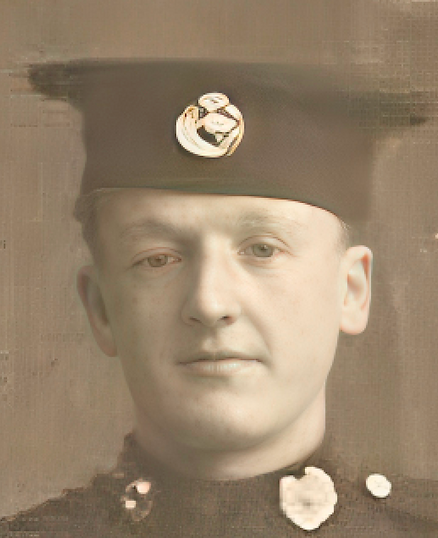_edited.png)
Pte. Harry Sims, R.M.L.I.
Walter Henry Booker Sims, known as Harry, was born in Lambourn, Berkshire on 27th June 1897, the first child of Walter John Sims and Gertrude Emily Spencer. Walter and Gertrude had five children together who were, Harry Walter (Henry) Booker, Frederick William, Frank (Francis) Edwin, William Edmund and (Edith Gertrude) May. Frederick died in 1902 when he was only three years old and William in 1911 aged just four. His father Walter Snr. Served in the Great War as a “Staff Farrier” with the Royal Field Artillery and survived the conflict. Harry came from a family of “Blacksmiths”, which unusually for the time, included his Aunt Annie Booker from who he took one of his names. However, when he left school in 1911 he did not go into the trade and instead found work as an “Errand Boy”.
On the 5th January 1913 aged fifteen, he left this work to join the Royal Navy and was accepted as a “Boy 2nd Class” and sent to HMS Ganges II, the onshore establishment at Shotley in Suffolk to begin his training. He signed on for the standard twelve years to begin on his eighteenth birthday and was described as 4 feet 11⅖ inches in height, with brown hair, grey eyes and a fair complexion. Despite his small stature, Harry progressed quickly and with a few months was posted to HMS Hawke, then HMS Endymion before returning to the Hawke in November 1913. Less than a month later however, his naval career stalled when he was invalided from the service on 5th December owing to “Acute Rheumatism”. This appears to have been Rheumatic Fever from which Harry recovered.
Following the outbreak of war, Harry re-enlisted in the Navy, this time with the Royal Marines Light Infantry and proceeded to serve for much of the war. He was at the Battle of Jutland in 1916, the world’s last major battle primarily between warships, aboard HMS Princess Royal. Despite his ship being hit nine times during the Battle Harry survived when twenty-two of his crew mates did not. The rest of Harry’s war was spent on routine naval patrols around the British coastline which included support duties at the Battle of Heligoland-Bight in 1917.
In February 1919, Harry was severely injured when he suffered a fall from the mast rigging and landed on his head on the ship’s deck. He was taken after some time to a hospital ship, HMS Garth Castle at Scapa Flow in the Orkney Islands for treatment. From there he was transferred to another ship in the vicinity and brought to Portsmouth. At this point, Harry was invalided from the service for a second time owing to the seriousness of his injuries and on the 31st May 1919 he was awarded the Silver War Badge for Services Rendered. He was finally transferred to West Herts Hospital in Hemel Hempstead where his family now lived and where his father had served with the RFA. He arrived at West Herts in the second week of August and continued to be treated for his injuries. Sadly however, he did not recover and in mid-October he suffered a fatal heart attack which was indirectly attributable to his fall earlier in the year although his bout of Rheumatic Fever may also have been a contributory factor.
Harry died in hospital on Friday, 17th October 1919. He was buried in a quite service at St Mary’s Church in Apsley a few days after he had died.
Harry is Remembered with Honour in St Mary’s Churchyard, Apsley End, Hertfordshire, United Kingdom
He was 22 years old when he died.
Harry is entitled to the British War Medal and the Allied Victory Medal.


